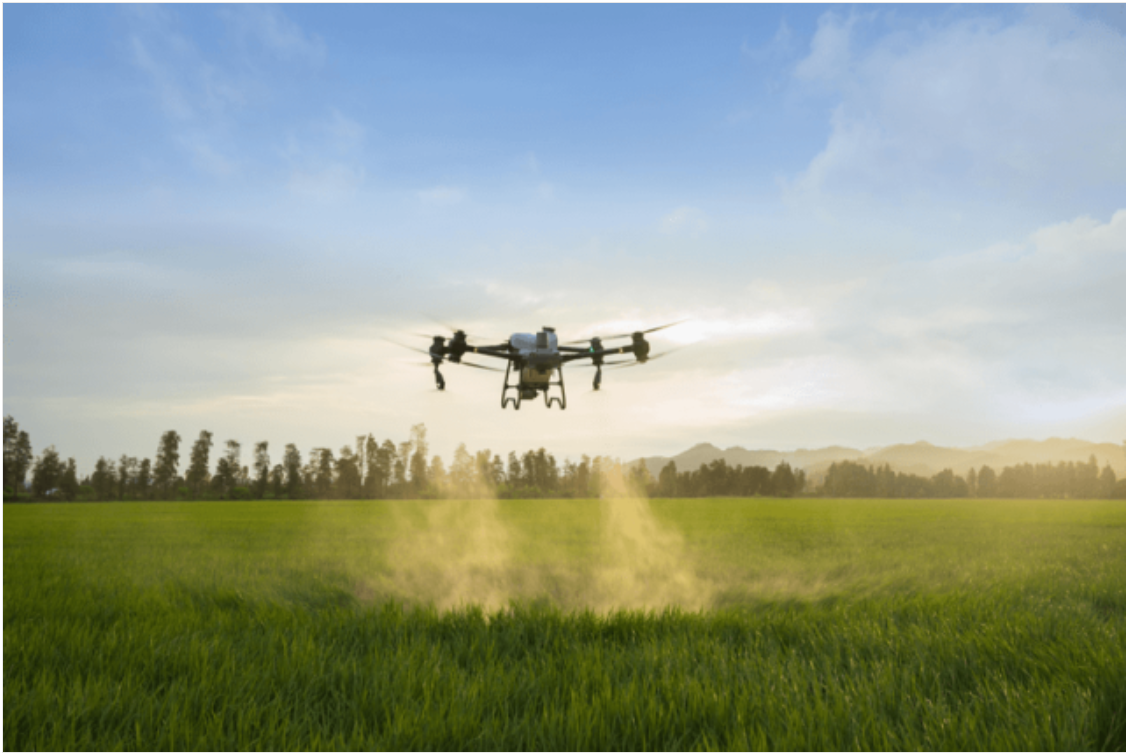
As global agriculture moves toward digitalization and intelligence, drone technology has become a vital force driving sustainable agricultural development. With their efficient and precise operational capabilities, drones not only enhance the technological sophistication of farmland management but also help agricultural production address multiple challenges such as labor shortages, environmental pressures, and food safety.
The Key Role of Drones in Smart Agriculture
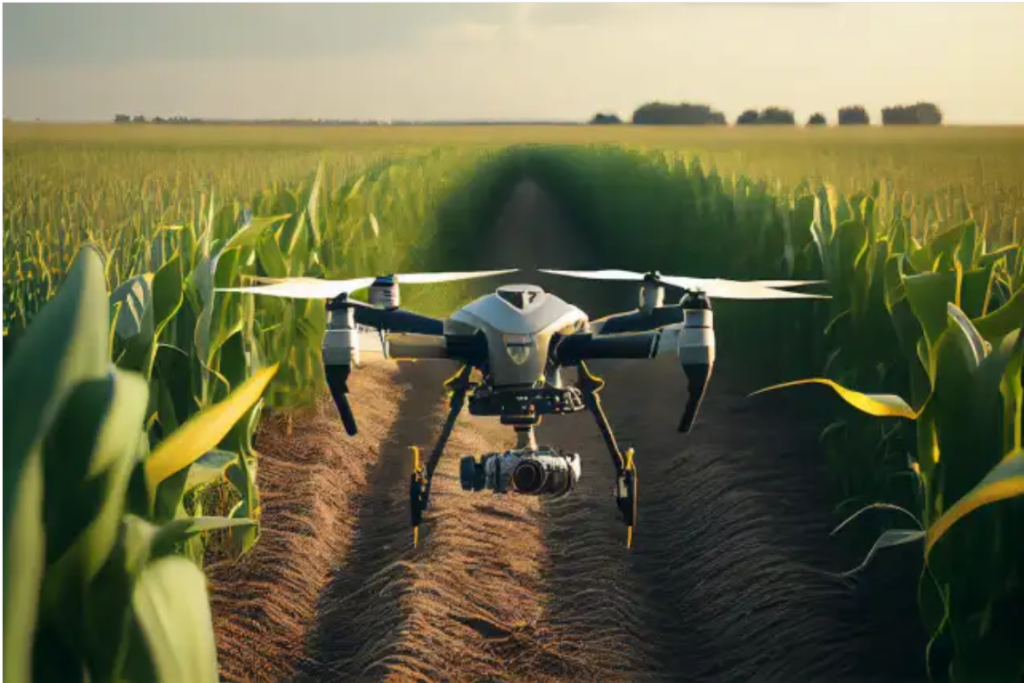
Drones provide farmers with precise data collection from an aerial perspective, significantly enhancing the efficiency of crop monitoring and management. Equipped with multispectral sensors, high-definition cameras, and infrared equipment, drones can collect critical information in real time on vegetation health, soil conditions, and the distribution of pests and diseases. This data, analyzed through advanced algorithms, supports precision fertilization, intelligent irrigation, and pest control.
Specific applications of drones include:
- On-site Crop Monitoring: Utilizing multi-band drone imagery, drones generate vegetation index maps (such as NDVI) to assess plant growth status and provide timely warnings of pests and diseases and water shortages. – Targeted Spraying: Drones can flexibly and quickly apply pesticides or nutrients to specific areas, achieving a win-win situation by conserving resources and reducing environmental pollution.
- Land and Resource Management: Through high-precision terrain mapping, drones assist in planning farmland drainage systems and optimizing planting layouts.
Technological Integration to Promote Intelligent Agriculture
The efficient operation of drones relies on key sensing technologies such as GPS navigation and inertial measurement units (IMUs) to ensure stable flight and precise positioning in complex environments. Furthermore, the massive amounts of data collected by drones, combined with artificial intelligence, big data analysis, and machine learning, enable in-depth understanding of agricultural conditions and support decision-making.
Agricultural automation also encompasses ground robots, self-driving tractors, and intelligent irrigation systems. Drones collaborate with these devices to build the “Agriculture 4.0” ecosystem.
Market Trends and Challenges
While the widespread use of drones in agriculture has brought significant benefits, they still face multiple challenges, including technical, regulatory, and cost challenges:
- Technical Challenges: Drones must adapt to changing climates and terrains to maintain safe and stable flight. Sensor accuracy and flight endurance also limit their application. Regulatory Restrictions: Many countries have strict restrictions on the flight altitudes and routes of agricultural drones, hindering their large-scale deployment. Cost and Training: Although the cost of drone technology continues to decline, small farmers still face initial investment and operational skills challenges. To address this, rental services and “Robots as a Service” (RaaS) business models have emerged, lowering the barrier to entry for farmers and improving equipment utilization. Future Outlook:
As a core tool in smart agriculture, drones will continue to develop towards full automation and intelligentization. Combined with 5G communications and edge computing technologies, drone data transmission and immediate response capabilities will be greatly enhanced. Furthermore, by strengthening the sharing of agricultural big data and upgrading algorithms, drone agricultural applications will become more precise and efficient.
Cross-sector collaboration and policy support are also key to promoting the widespread use of drones in agriculture. This collaborative effort will accelerate the achievement of precision agriculture, water and energy conservation, and environmental protection goals, contributing to the development of a global sustainable agricultural production system.
This article integrates the latest technical data and industry cases to demonstrate how drones are becoming a core driving force in the modern smart agriculture revolution. The text is original and well-structured, making it suitable for professional communication and market introduction in the fields of agricultural technology and intelligent equipment.